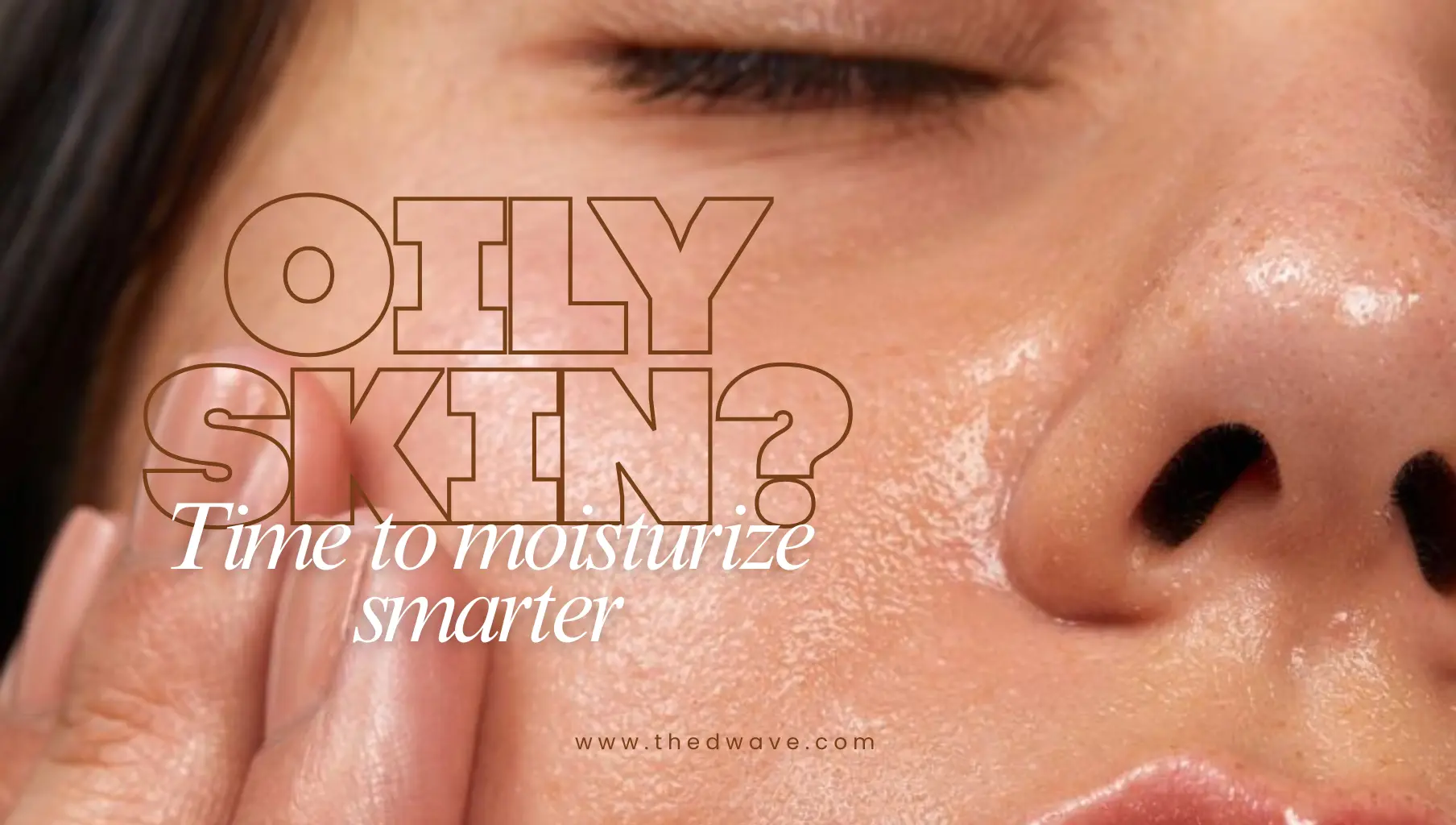
The worst decision you make for oily skin is to skip the moisturiser because despite all the oiliness, your skin requires hydration. Hydration is not equivalent to oiliness because when you choose the right kind of moisturiser, your skin feels hydrated without feeling heavy.
Read on to know the answer to the burning question - Can oily skin use moisturiser? We will take you through everything - why, what kind, how to use a moisturiser for oily skin, what to avoid.
Why does oily skin require a moisturiser?
Let us start off with the most question - Why does oily skin require a moisturiser? Doesn’t it make matters worse?
Turns out:
Oil or grease on your skin is an indication of dehydration: When your skin feels shinier or oilier than usual, it doesn't mean your skin is hydrated or nourished. In fact, when your skin is parched or starved off moisturising, the skin secretes more sebum to make up for the lack of oiliness. Hence, the shine!
Moisturiser is the armour to your barrier: Whatever your skin type, your skin barrier always needs that extra protection and a moisturiser helps create an armour for your skin to protect it from any external concerns that might clog pores and stimulate further oiliness.
Moisturiser might balance your routine: In a bid to take off the grease and grime, we might resort to solutions that dry out the skin in the process - like an exfoliator. It’s important to bring about balance with a little nourishment via a moisturiser.
How to choose and use the right moisturiser for oily skin
- Non-comedogenic: It’s important that oily skin has a moisturiser that lets the skin breathe instead of stifling it. And that’s why it's important to opt for a non-comedogenic one that doesn’t clog your pores and build up grime and grease.
- Light-weight texture: Water-based creams, gel consistency are oily-skin friendly which absorb into your skin without making it feel heavy and congested.
- Hydrating and cooling ingredients: Hydrating ingredients like Hyaluronic acid, Cica, Aloe Vera provide a plumped look without unnecessary grease and also keep the skin feeling calm and cool.
- Barrier-friendly ingredients: Ingredients that moisturise along with strengthen the barrier because as we age, our barrier needs more protection than required. Niacinamide is one of the preferred ingredients that gives your the perfect glow up along with nourishing the barrier and it helps reduce the appearance of pores.
- Matte finish - Products that give you a matte look are the best as they help absorb excess oil. Reports suggest ingredients like silica or clay-based kaolin help with absorption and do not trigger the skin further.
Day vs Night Moisturiser
Your AM routine can contain a light-weight, gel-based moisturiser that absorbs instantly without adding another layer. Follow it up with an ultra-light and ultra-calming sunscreen so that your skin feels contained and soothed.
Whereas your PM moisturiser should set your skin’s repair mode in motion as our skin starts to renew itself at night. A moisturiser that calms the skin without adding a thick, closed-off layer and rejuvenates it so that your skin is ready for the next day’s battles. A moisturiser that contains hyaluronic acid or niacinamide is most suited because the former helps with hydration while the latter strengthens the skin and fades out the size of the pores.
What to Avoid
- Alcohol-based ingredients: Any formulation that contains alcohol dries out the skin further causing the skin to secrete more oil to make up for the dehydration.
- Excessive fragrance: Products with a strong fragrance can be triggering and may push the skin further if it is on the brink of a breakout. Oily skin needs calming ingredients to ensure no triggers are initiated.
- Oils: Only certain types of oils suit oily skin - the light-weight ones like jojoba or clove oil or grape seed - as they don’t create build up like the heavier oils do - castor oil for instance.
At what step does one moisturise?
AM Routine: Cleanse → Moisturise → Sunscreen
It is usually the penultimate step — one before the sunscreen during your AM routine, just after cleansing your face.
PM Routine: Cleanse → Moisturise
And it is the last step in your PM as it stimulates your skin for repair allowing it to unwind after a long day.
The D Wave Moisture Boost Gel
A super-hydrating, non-comedogenic gel crème with Olive Squalane that nourishes your skin while keeping it light and fresh.
Shop Now
To sum it up
To sum it up, even oily skin requires a little love and pampering - nothing like a light-weight moisturiser to help with the process. And don’t resist the oiliness, work to manage it, not avoid it altogether because Oily skin has its own advantages - it doesn’t age faster, textures and lines are less visible. So embrace your skin type and take steps to dim the imperfections and not obsess over it!
FAQ
1. How to choose an oily skin moisturizer?
When choosing a moisturizer for oily skin, you should take into consideration the following parameters:
- The texture: Whether it is light-weight or heavy on the skin.
- Whether it is non-comedogenic, as this helps prevent pores from clogging, which could exacerbate oiliness and cause breakouts.
- Contains cooling, soothing, and hydrating ingredients like Cica, Niacinamide, and Aloe Vera.
2. What type of moisturizer is best for oily acne-prone skin?
The best kind of moisturizer for oily and acne-prone skin is a light-weight, gel-based, non-comedogenic formula that contains hydrating and cooling ingredients such as Olive Squalane, Aloe Vera, Hyaluronic Acid, and Niacinamide.
3. How many minutes should we wait after applying moisturizer?
After cleansing your face and patting it dry, you can apply a moisturizer right away for faster absorption and immediate effect. This applies to both your AM and PM skincare routines.
4. Can we apply sunscreen immediately after moisturizer?
It is best to wait until your skin has absorbed the moisturizer before applying sunscreen. The moisturizer acts as a base, helping the sunscreen spread evenly without feeling sticky. However, depending on your region and level of humidity, you can skip the moisturizer if your sunscreen already contains hydrating ingredients.